
Identify a Wexford Property Owner
The method runs from a stable property key to a name lead. It then moves on to recorded proof. Wexford County's Register of Deeds FAQ says a searcher with only an address should go to County Equalization first. The local city, township, or village assessor works too. That step yields a likely owner. Next, search the deed index by that name. Add an approximate year to reach the recorded instrument.
- Match the street address to the parcel code through Wexford County Equalization or the county GIS.
- Copy the assessment owner or taxpayer name, mailing address, legal-description lead, assessing unit, and source year.
- Search that name as grantee in the Tyler land-records portal, using variants and a date range.
- Open the newest plausible deed. Compare its grantee, recording date, legal description, and prior-instrument reference with the parcel.
- When a trust, company, estate, or representative appears, follow the matching official branch rather than guessing at an individual.
This route answers an ownership question far better than a name-only web search. It also leaves a repeatable trail if one records portal is down.
Wexford Ownership Sources Compared
Each Wexford source answers a different piece of the owner question. No single screen deserves more weight than its purpose allows.
| Where ownership appears | What it contributes | Currency limit |
|---|---|---|
| Assessment roll | Owner or taxpayer lead, mailing address, parcel code, value year | May lag a newly recorded transfer |
| GIS parcel map | Mapped parcel selection, code, location, and ownership lead | Exact refresh and field labels were not captured |
| Register of Deeds index | Grantee, document type, recording data, and image route | Index is a finding aid; inspect the deed |
| Recorded deed image | Vesting language and legal description for the conveyance | Must be the latest operative instrument for the parcel |
| MiBusiness Registry | Michigan entity filings and registered-agent route | Does not itself prove parcel ownership |
The county computer-indexes deed entries daily, but it publishes no refresh cycle for the public assessor or GIS owner field. Write down both retrieval dates as you go. For a closer look at the name currently on the tax roll, see the current property owner page.
Start with Wexford's Parcel
A street address is just an administrative label. Wexford's building packet explains that a vacant parcel usually receives no address until a building permit and zoning approval exist. A permit comes first. Building or Equalization assigns the number. It can also change when a road is created. Numbering can become impractical. A county-line road can create confusion. So an older deed may carry no street number. It may list a former road name. It may offer only a legal description.
Preserve every identifier you encounter. Keep the parcel code, address, legal description, plat and lot, the section-township-range description, and any prior parcel code. A split creates child codes while the older deed still names the parent tract. A combination can show one assessment unit even though recorded interests stay separate. The Wexford County parcel map helps connect these record languages. It is not a survey.
- Owner of record
- The name an official roll or recorded instrument identifies for its own purpose and date.
- Grantee
- The party receiving an interest in a deed.
- Situs address
- The physical property address, not necessarily the owner's mailing address.
- Title
- The legal ownership interest; a portal name alone is not a title opinion.
Confirm the Wexford Deed
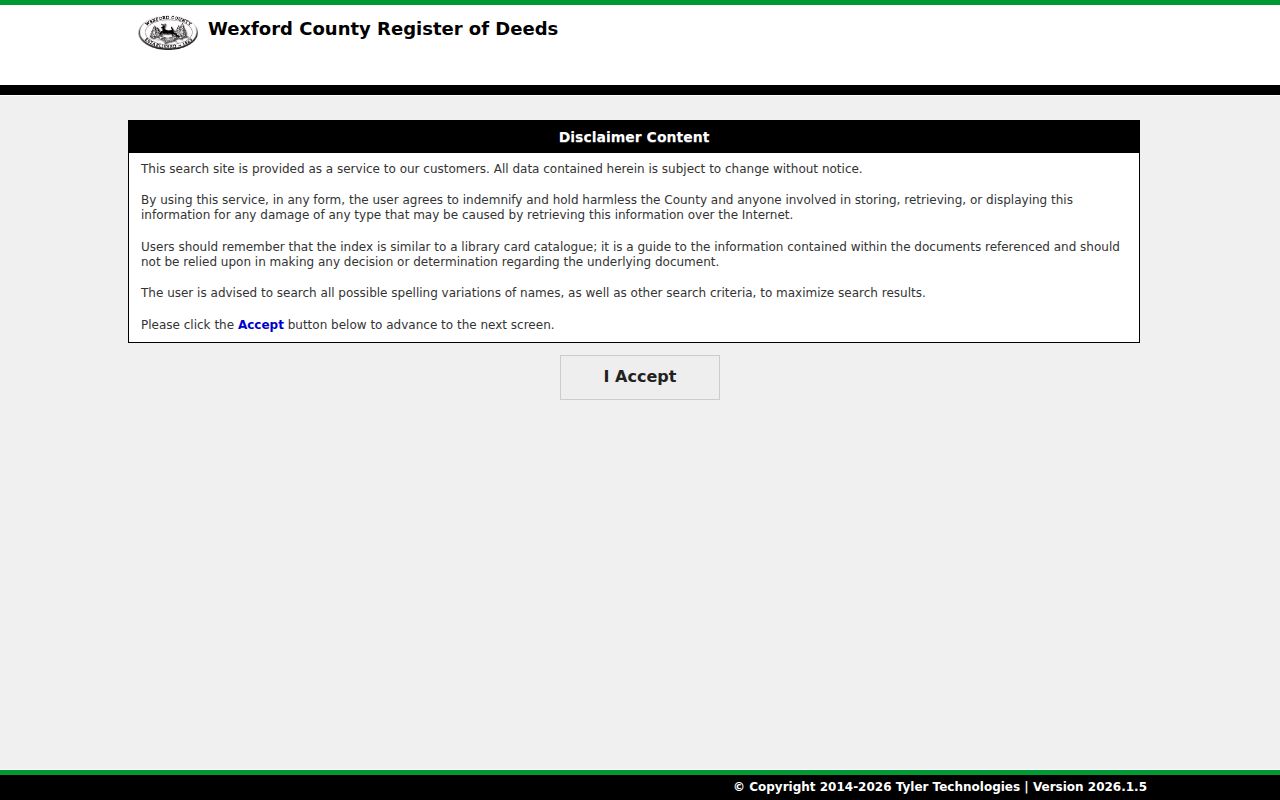
The Register of Deeds records warranty deeds, quitclaim deeds, administrator deeds, tax deeds, sheriff deeds, land contracts, probate orders, mortgages, liens, surveys, and plats. The public Tyler index opens after you accept its disclaimer. Search the likely current owner as grantee over a reasonable year span. Compare the legal description instead of grabbing the first same-name result.
The county states its land records reach back to 1864. The office page says the computer image index reaches January 1968. The FAQ describes scanned or indexed material from 1965. The live Tyler portal labels certified documents from January 1, 1976. These are distinct coverage layers. An older ownership question may require books, microfiche, microfilm, or staff help. For the full backward chain, see former property owners. For copy and index mechanics, see deed records.
Note: The Tyler disclaimer compares the index to a library catalog. Read the instrument before relying on any row.
Trusts, Companies, and Estates
A deed may name an LLC, corporation, trust, estate, or personal representative. That entity or fiduciary is the relevant recorded party. Do not swap in a member, beneficiary, trustee, heir, or officer. Do so only if the operative record supports the step. For a Michigan company, check filing identity and status in the official MiBusiness Registry. Then return to the deed tying it to the parcel.
After a death, the tax roll can still show the decedent as owner of record. A survivor's rights may exist without any new deed. Wexford's FAQ says a survivor or spouse transfer may require a certified death certificate. Recording fees may also apply. The office does not draft a new deed. Search Probate, later deeds, affidavits, death filings, personal-representative deeds, and orders under name variants. A missing public result does not prove no estate exists.
Check the 2024 Image Gap
Wexford County reported a November 5, 2024 cyber incident. The Register of Deeds says fewer than 5 percent of documents recorded before the incident remained unrecovered. The identified window runs from August 14 through October 30, 2024. That local quirk can explain a blank or degraded result. It can happen when you confirm a recent transfer, mortgage, lien, or release.
Contact the office at 231-779-9455 or through its official page. Give the parties, the approximate date, and an instrument number if known. Include the parcel's legal description too. Ask whether the index and image are complete. Also ask whether microfilm, paper, or re-recording supplies the authoritative copy. A missing image never proves that no conveyance occurred.
Use Wexford Fraud Notify
Tyler hosts a Fraud Notify service for Wexford County. It sends an alert when a document is recorded under a name the subscriber chooses. The service confirms sign-ups by email. A subscriber can change settings or unsubscribe at any time. Tyler states no fee for enrollment. One caution applies here. An alert on a shared name may involve a different person. The absence of an alert does not prove that no relevant recording exists. Owners can use it to watch for filings against their interests, not as a guarantee. The official Wexford Fraud Notify page shows the enrollment screen.
The service complements, rather than replaces, a current deed and assessment check.
When Owner Portals Fail
Wexford County delivers ownership data through its assessment and GIS system. The BS&A portal displays the assessor card for a parcel. Screen labels can vary, though. A field marked as owner may instead show the taxpayer, a mailing name, or the deed holder. When a label seems unclear, ask the Equalization Department which roll date the entry reflects before relying on it. County-referenced BS&A access opens the portal.
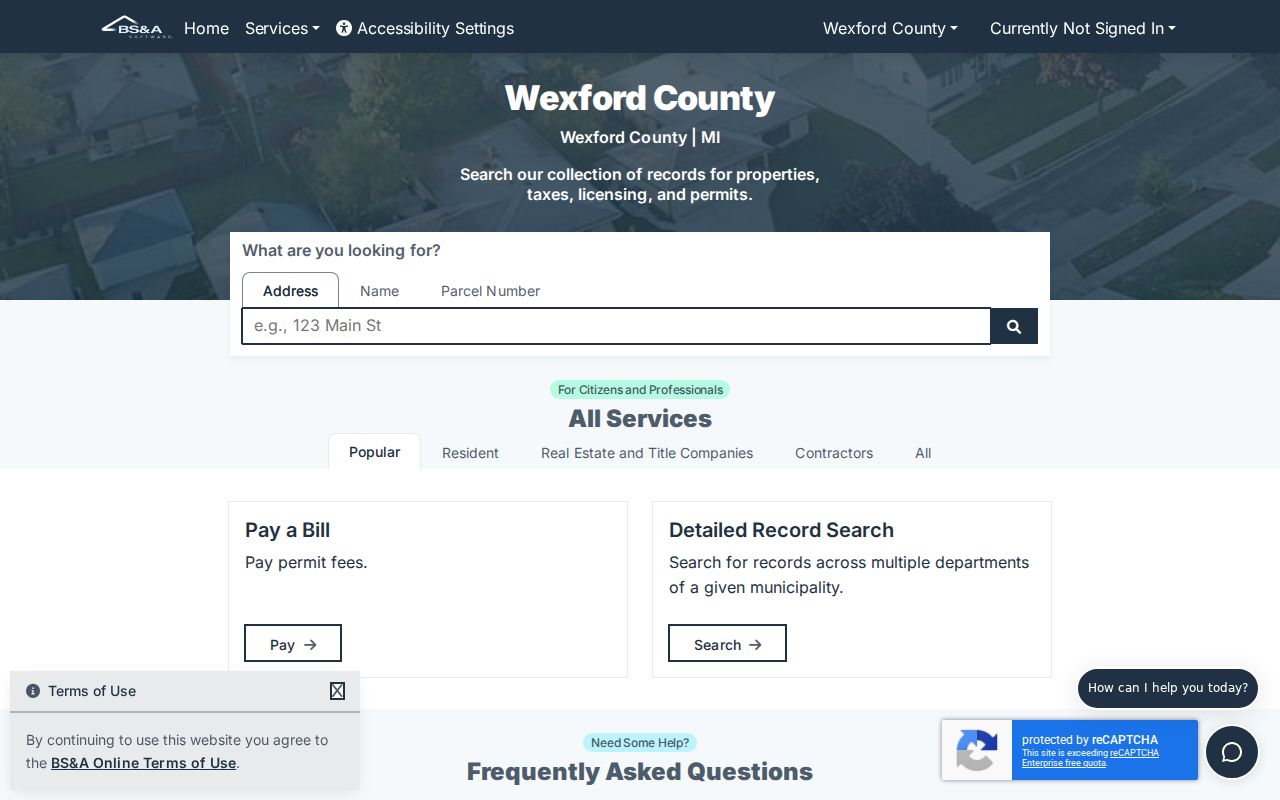
Denied access is not the end. Call Equalization at 231-779-9470, or file a narrow Michigan FOIA request for the existing parcel record. Michigan FOIA allows five business days for a response, plus one extension of ten business days.
Limits of a Wexford Owner Search
A name on an assessor card proves ownership on paper. It does not prove occupancy. The tax mailing address, assessor field, and GIS label can each lag or differ. None of them replaces a full title search. A parcel may sit inside a trust or an entity. It can carry an unrecorded dispute. It can also hold a deed too new to appear in every system. The Michigan Address Confidentiality Program adds one more wrinkle. It substitutes or withholds an address for a qualifying participant.
Use owner information lawfully. Verify ownership for a purchase, boundary question, estate, tax issue, fraud concern, or property history. Do not use public records to profile occupants, defeat address protection, stalk, harass, or harm anyone.
A solid answer to who owns a Wexford County property cites its source, date, parcel, and newest supporting instrument. It also flags any gap that remains unresolved.